From Competition to Coaching: How Camille Banzet Is Changing Junior Golf One Swing at a Time
October 27, 2025 6 min read
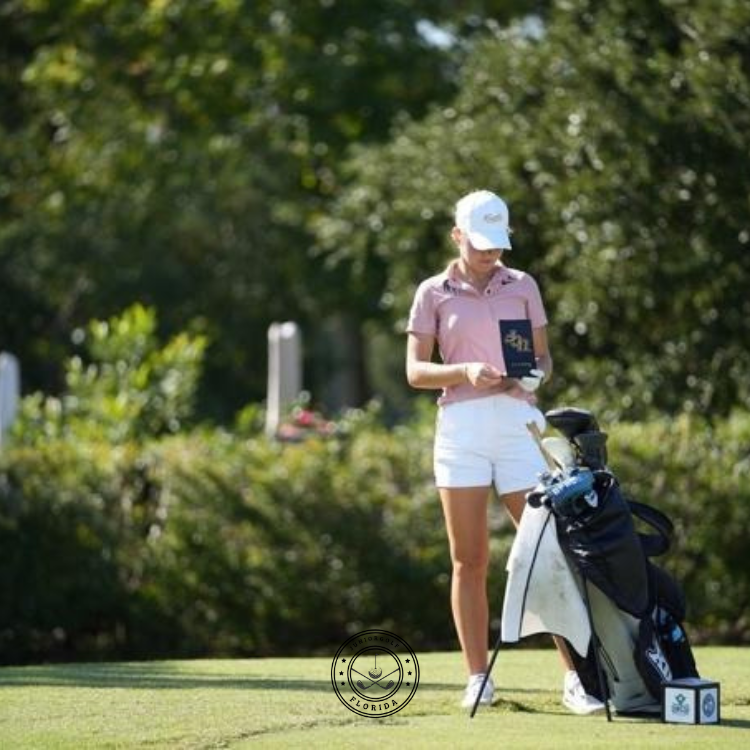
Coach Camille Banzet, former UCF Women’s Golf Team member and instructor at Crane Lakes Golf & Country Club, shares her insights in our latest JGIF feature. In this interview, she opens up about her coaching approach, her love for junior golf, and the lessons she hopes every young player takes to heart.
Meet coach Camille Banzet, a former member of the UCF Women’s Golf Team whose real love for the game now drives her mission to shape the next generation of junior golfers. At the helm of instruction at Crane Lakes Golf & Country Club in Port Orange, she uses her student-athlete experience to guide young players not only in mastering fundamentals but also in building smart course strategy and a winning mindset. For any junior golfer ready to get serious—while still having fun—Camille is the coach who’s ready to roll up her sleeves and help them grow.
- What was the most valuable lesson you learned playing college golf
The most valuable lesson I learned from playing golf in college was that it taught me discipline, both on and off the course. To be successful at golf, it’s not enough to hit good shots; you also have to be present, commit to training, manage your time, and stick to your routines. The habits I developed in college, such as preparing properly for each game, finding a balance between academics and sports, and taking responsibility for myself, have shaped the way I approach coaching and life in general.
- What do you think young golfers should focus on the most when they’re just starting?
I think young golfers should focus most on developing good fundamentals and enjoying the game. It’s easy to get caught up in scores or distance early on, but the real key is building a solid foundation such as the grip, posture, alignment and learn to repeat good habits. Just as important, they should learn to love practicing and competing, without fearing mistakes. When juniors stay curious, have fun, and focus on improving a little each day, the confidence and results come naturally later on.
- What’s one mistake you see a lot of junior players make early in their golf journey?
A mistake I often see young players make at the beginning of their golfing career is spending hours on the driving range without playing enough on the course. The driving range is a good place to work on your technique, but it’s by playing, making mistakes, and learning to deal with different situations on the course that you really improve. Juniors need to find a balance between practice and actual play in order to develop their sense of the game, their creativity, and their course management skills, not just a nice swing. When I was younger, almost every session with my coach consisted of playing a few holes at the end of the session or spending the entire session on the course practicing all the shots.
It’s thrilling to see a player put what they’ve worked on in practice into action under pressure, or to see them solve a problem on their own.
Camille Banzet
- How do you help juniors stay confident after a tough round or bad tournament?
After a tough round or a bad tournament, I try to help juniors see the bigger picture. I remind them that one round does not define their abilities and encourage them to think about what they did well, even if the overall score wasn’t ideal. We turn mistakes into easy-to-learn lessons rather than failures, and we set modest, achievable goals for the next practice or game. I also emphasize the importance of effort and progress rather than results, to help them regain confidence and stay motivated for future competitions.
- How important do you think tournament experience is for juniors?
Tournament experience is fundamental for juniors because it teaches them things that training alone can never teach them. Competing under pressure helps them learn to manage their nerves, make decisions, and stay focused when every shot counts. It also gives them the opportunity to better understand their game, what works under pressure, and what needs improvement. But just as importantly, it helps them develop emotional control and learn that one bad hole does not define the round. The earlier they start competing, the more comfortable and confident they will feel in tournaments later on.
- What role do parents play in a junior golfer’s success — and how can they best support their kids?
Parents play a vital role in the success of a young golfer, but the most important thing is to create a positive and encouraging environment. The best support comes from encouragement, not pressure. Children need to feel that their parents are proud of their efforts, not just their scores. When parents remain patient, focus on attitude and progress, and let the coach handle the technical aspects, it helps young people enjoy the game and stay motivated.
I was lucky because my parents always supported me, never put pressure on me, and never tried to coach me or tell me what to do. That made a big difference because it meant I didn’t have any extra pressure.
- What are your goals as you work toward becoming a PGA Member?
My main goal, as I strive to become a member of the PGA, is to improve as a teacher, but also, and above all, to learn how tournaments work and how a golf club is managed on a daily basis. I hope to one day run my own golf course. So it’s just as important for me to gain experience in club operations, event management, and organizing exceptional experiences for members as it is to improve my coaching skills. Combining these two aspects of the game, teaching and organizing, will help me become an accomplished golf professional.
- Are there any coaches or mentors who have influenced your teaching style?
Yes, my coach Thierry in France had a major influence on my teaching style. What I admired most about him was his ability to be serious and disciplined in improving our skills while making the process fun and stimulating. He taught me that learning the game is not just about technical exercises, but also about enjoying the course, staying motivated, and building self-confidence. I try to bring that same balance to my juniors, encouraging them to work hard and focus on their development, while having fun and staying positive on the course. Golf is definitely a sport with ups and downs that requires time and persistent practice.
- What advice would you give to junior golfers who hope to play in college one day?
My advice to young golfers who want to play in college is to focus on building a solid foundation, both technically and mentally. Work on your consistency, develop good habits, and quickly identify your strengths and weaknesses. Mental strength is just as important: learn to stay calm under pressure and view mistakes as lessons to be learned, not failures. Off the course, juniors also need to stay organized and disciplined in their schoolwork, as grades and time management are just as important as golf when it comes to college opportunities. And finally, enjoy the process: if you love the game and stay curious, the results will follow.
- What’s your favorite part of watching a junior golfer improve over time?
My favorite thing about watching a young golfer progress is seeing them gain confidence and independence on the course. It’s thrilling to see a player put what they’ve worked on in practice into action under pressure, or to see them solve a problem on their own. The real reward isn’t just improved scores, it’s also seeing their progress, their enthusiasm when they hit a good shot, and the pride they feel in their progress. The moment when all their efforts payoff is truly special.
Enjoy the process: if you love the game and stay curious, the results will follow.
Camille Banzet
- Where can parents or juniors find you for lessons, clinics, or coaching sessions?
Parents or juniors can find me for lessons, clinics, or coaching sessions through the Golf shop at Crane Lakes, or they can contact me directly at 407-561-3534. You can find me on Instagram @readytogolf_cam, where I post tips, drills, and updates from my coaching work.